Dye plants of the Brazilian Cerrado
A guide to native plants of the Brazilian Cerrado used in natural dyeing: barbatimão, mangabeira, murici and pequi. Botanical name, colour and history.
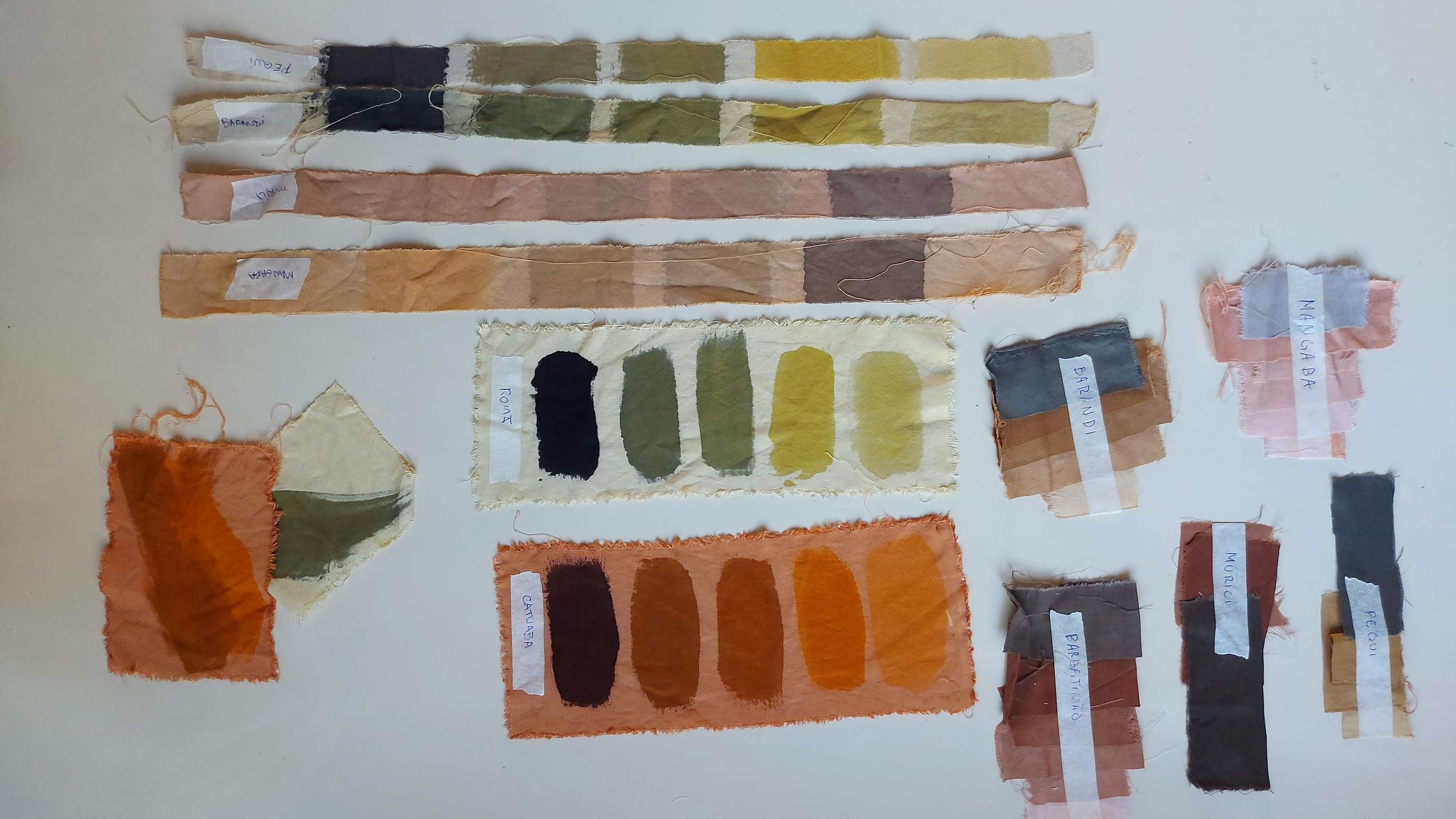
The Cerrado as palette
A journey through the plants of the Cerrado and the colours their leaves and bark reveal in natural dyeing. Each species offers different chromatic possibilities, transformed by extraction and by its interaction with mordants.
Barbatimão
Botanical name: Stryphnodendron adstringens Part used: trunk bark Colours: earthy, pinkish and deep brown tones.
Rich in tannins, barbatimão bark reveals deep, earthy tones, especially with lime, close to the palette obtained from murici. Native to the Cerrado, barbatimão is known for its traditional uses and medicinal properties. Its richness in tannins also draws interest in dye research, widening the ways species of the Brazilian flora can be used.
Mangabeira
Botanical name: Hancornia speciosa Part used: trunk bark Colours: oranges, greys and rust tones.
Mangabeira bark gives orange tones with alum or aluminium acetate, greys with iron and rust tones with lime, revealing different nuances depending on the dyeing process.
Native to Brazil, the mangabeira is best known for its fruit, part of the diet and culture of many regions.
Murici
Botanical name: Byrsonima spp. Part used: trunk bark Colours: soft pink, grey, greyish pink and terracotta.
Murici bark reveals pinks with alum or aluminium acetate, greys with iron and greyish pinks with the two combined. With lime, it can reach deeper tones and terracottas, linked to the presence of condensed tannins.
The name murici covers several species found in the Cerrado and in other Brazilian biomes.
Pequi
Botanical name: Caryocar brasiliense Part used: leaves Colours: vibrant yellows, olive greens, dark tones and ochres.
Pequi leaves offer a varied palette: vibrant yellows with alum or aluminium acetate, near-black tones with iron, olive greens with the two mordants combined and ochres with lime.
An emblematic tree of the Cerrado, the pequi bears fruit deeply tied to regional food and culture. Beyond their culinary use, its leaves show real dye potential.