How mordants work in natural dyeing
What a mordant is, why it is necessary, and how to fix natural colours in textile fibres. An introductory guide for anyone who wants to explore this world.
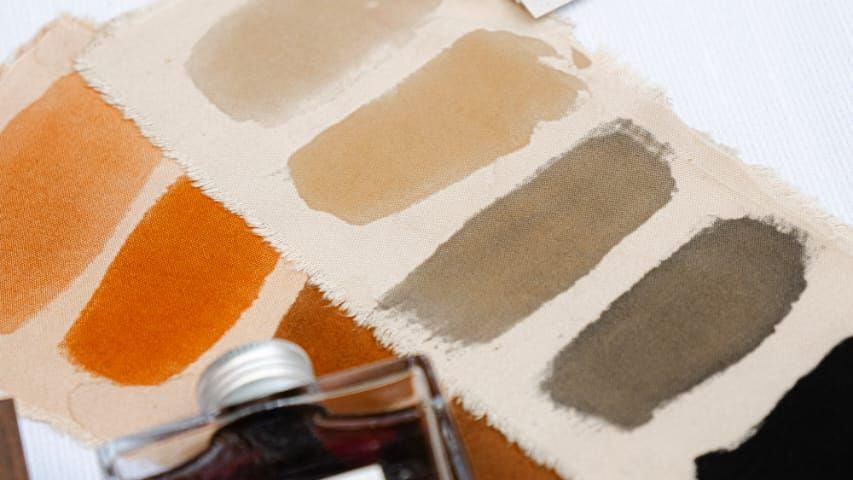
What is a mordant
A mordant is a metallic salt that creates a chemical bridge between the textile fibre and the natural dye. Without a mordant, most natural dyes do not fix: the dye wraps around the fibre, but fades with exposure to light and washing.
The word comes from the Latin "mordere" (to bite) — the mordant literally "bites" both the fibre and the dye, keeping them bonded. In natural dyeing, the mordant is as important as the plant that provides the colour.
The most commonly used mordants
Alum (potassium aluminium sulphate) is the most common and safest mordant in natural dyeing. It produces bright, clear colours without significantly altering the tone of the dye. It is the starting point for most processes at the Lapso atelier.
Iron (ferrous sulphate) is a powerful colour modifier: it darkens and cools tones, turning yellows to greens, reds to purples, browns to greys.
Protein fibres versus cellulosic fibres
The type of fibre determines which mordant works best and at what concentration. Protein fibres — wool, silk, alpaca — have amino groups in their structure that bond naturally with alum. The process is direct: mordant bath, then dye bath.
Fibres of cellulosic origin — cotton, linen, hemp, viscose — are chemically neutral and need an extra step. The typical sequence at the atelier is: tannin bath (pre-mordant), then alum (mordant), then dye.
Natural mordants and responsibility
At the Lapso atelier, we use only mordants with low environmental impact. Alum, at normal dyeing concentrations, is considered safe for domestic effluent. Iron, in small quantities, is a soil micronutrient.
Historical mordants such as chrome, tin, and copper produce extraordinary colours, but are toxic: copper affects aquatic ecosystems, hexavalent chromium is carcinogenic. They have no place in a responsible studio. The choice of mordant is also an ethical choice.
Learn to reveal natural colour.
No previous dyeing experience is needed. The workshops take you through the process step by step, from preparing the material to the final result.