What is natural dyeing
Definition, history in Brazil, and the difference from synthetic dyeing. A guide written from experience in the atelier.
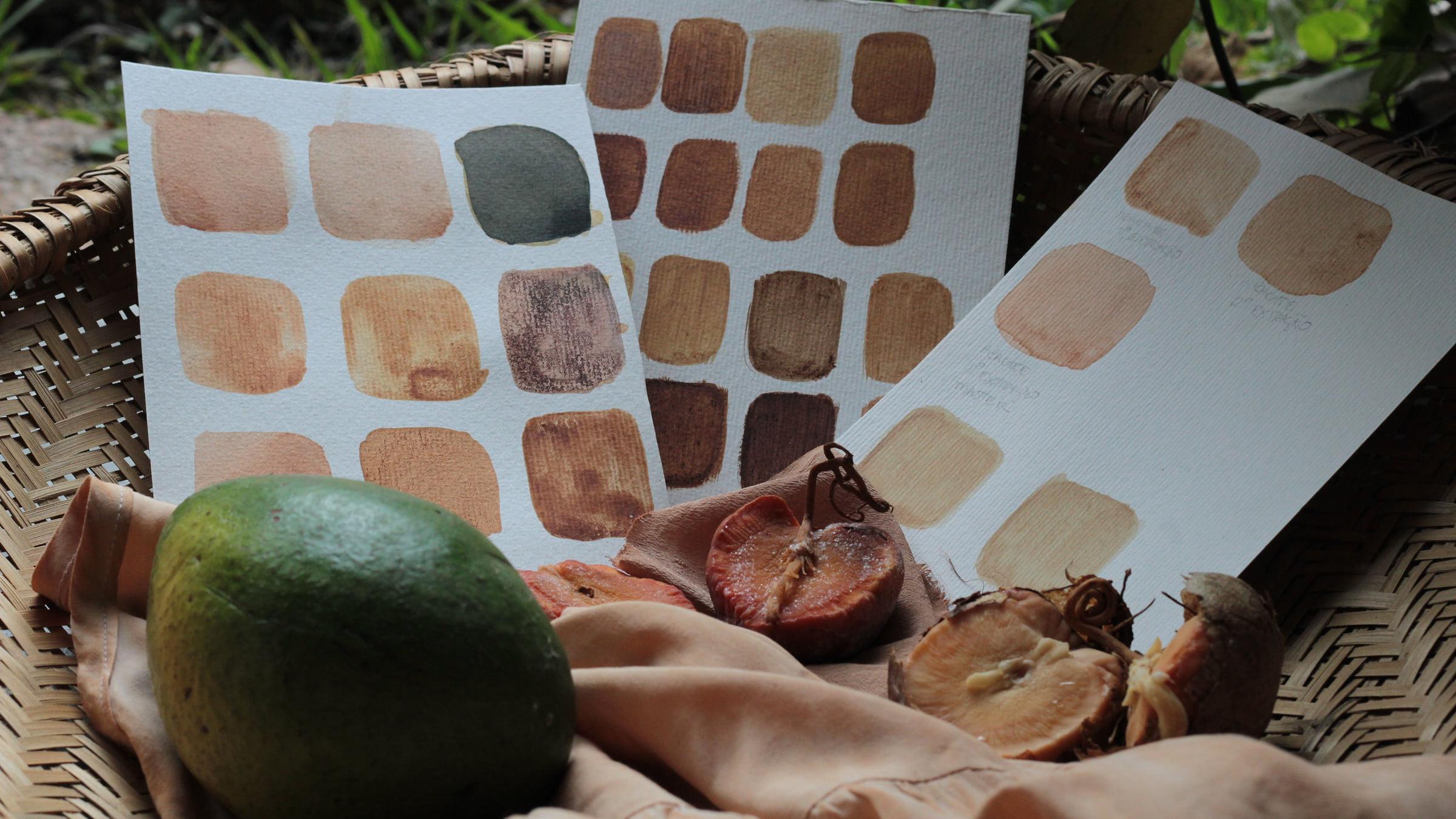
The difference a plant makes
Natural dyeing is the process of extracting colour from plant sources — such as leaves, bark, roots and fruit — and from mineral sources — such as red, yellow and purple earths — and fixing it in textile fibres. The difference from synthetic dyeing is not only chemical: it is philosophical. Natural colour is not manufactured to be perfect. It is never static: it is a living colour that transforms.
Each bath is unique: the concentration of the plant varies by season, as do the temperature of the water, the pH and the fibre receiving the dye. Two metres of linen dyed with the same dye, on the same day, come out slightly different. That is the signature of the natural.
A history of millennia in Brazil
Natural dyeing is not new. In Brazil, indigenous peoples used local plants — crajiru from the Amazon, jenipapo, urucum — to dye fibres, paint bodies, and mark fabrics long before the arrival of European dyes. Pau-brasil, which gave the country its name, was a precious source of red pigment exported to Europe.
In the 19th century, synthetic dyes swept away virtually the entire tradition of artisanal textile dyeing. Synthetic was cheap, consistent, scalable. Natural dyeing was confined to museums and isolated cultural resistance.
The revival of natural dyeing in recent decades reflects a search for alternatives to the conventional chemical processes of the textile industry, reconnecting the making of colour with the cycles of nature and with traditional knowledge.
How colour changes over time
One of the greatest practical differences of natural dyeing is ageing. Synthetic dyes tend to fade in a uniform, greyish way. Natural dyes evolve: indigo blues become softer and more veiled, while pomegranate yellows and madder reds gain depth over the years.
It is evidence that the colour is alive. A piece naturally dyed ten years ago carries the visible record of its history with light, air and use.
Where to begin
To try natural dyeing at home, a good way to start is with food scraps such as onion skins, avocado stones and pomegranate rinds. These materials can reveal surprising colours. Silk is a rewarding fibre for first tests: it has a good affinity with many natural dyes and responds well to mordants (fixatives).
To go deeper and achieve more consistent results, the Lapso workshops cover the fundamentals of natural dyeing in practice. You can understand each stage of the process, explore how fibres, dyes and mordants relate, and develop more deliberate dyeing, with better fixation and more lasting colour.
Learn to reveal natural colour.
No previous dyeing experience is needed. The workshops take you through the process step by step, from preparing the material to the final result.